COMPTOIR DES SCIENCES
Videoconference sessions between scientists and the public on topics of their choice.
Who are you?
I’m a teacher, and I’d like to sign my class up for a videoconference with a scientist

I lead a group and would like to talk in videoconference with a scientist
I’m a scientist, and I’d like to share my work with the public via videoconference
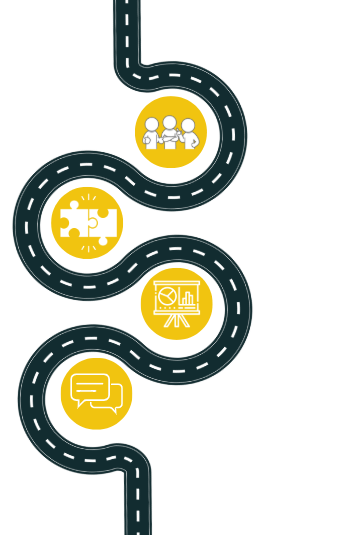
The format
Play “Debate” (Optional)**
To prepare for a meeting, organize a “Playful Debate” session to introduce your students to science-society debate and help them prepare questions for the scientists.
Matching
You provide a topic and your availability, and we’ll find you a contact person for a video conference discussion.
Presentation
After agreeing on a time and a videoconferencing tool, the participants will meet for a presentation on the research topic and the scientist’s profession.
Discussion
The event continues with an open discussion between the scientist and the audience.
FAQ
I’m not in mainland France—can I still participate?
Comptoir des Sciences is open to the entire French-speaking world. Be sure to specify your time zone when you register.
What is the minimum group size?
Please register a group of at least 3 people; however, we also allow scientists to specify the minimum group size they wish to meet with.
Is the Comptoir des Sciences just for kids?
No, anyone can sign up to chat with scientists.
Any questions ?
Contact cdscerclefser@gmail.com
Which platform should we use?
The FSER Circle does not require you to use a specific platform; once you’ve been matched, you can agree on a platform (virtual classroom, Skype, Zoom, Jitsi, etc.).
I’m a member of the educational staff—can I request multiple sessions with my scientist?
Scientists at Comptoir des Sciences sign up for sessions lasting one to two hours at most. These scientists are not there to create lessons or discuss research topics outside their areas of expertise. Once matched, participants (scientists and the public) are encouraged to communicate in advance to agree on the format of the session.
What are some possible topics to discuss?
We make sure to match you based on a shared topic, so both the public and the scientists must select at least one of these topics: anthropology, archaeology, astronomy, biology, cell biology, evolutionary biology, developmental biology, marine biology, plant biology, biomedical science, chemistry, climate, communication, law, ecology, economics, genetics, geology, history, computer science, artificial intelligence, languages, mathematics, medicine, meteorology, microbiology, neuroscience, oceanography/cartography/geography, paleontology, physiology, physics, psychology, materials science, social sciences
FUNDERS
EDUCATIONAL PARTNERS




SCIENTISTS PARTNERS




THEY’VE PLACED THEIR TRUST IN US


With the support of Inserm, Sorbonne Université, et de la SFE²